



 Important



 Notifications
 Notifications 1
Laying Out of Demonstration Plot lead the way in coconut root (wilt) disease management
Jul 29, 2026 : ICAR-CPCRI, RS Kayamkulam | Author:Web Admin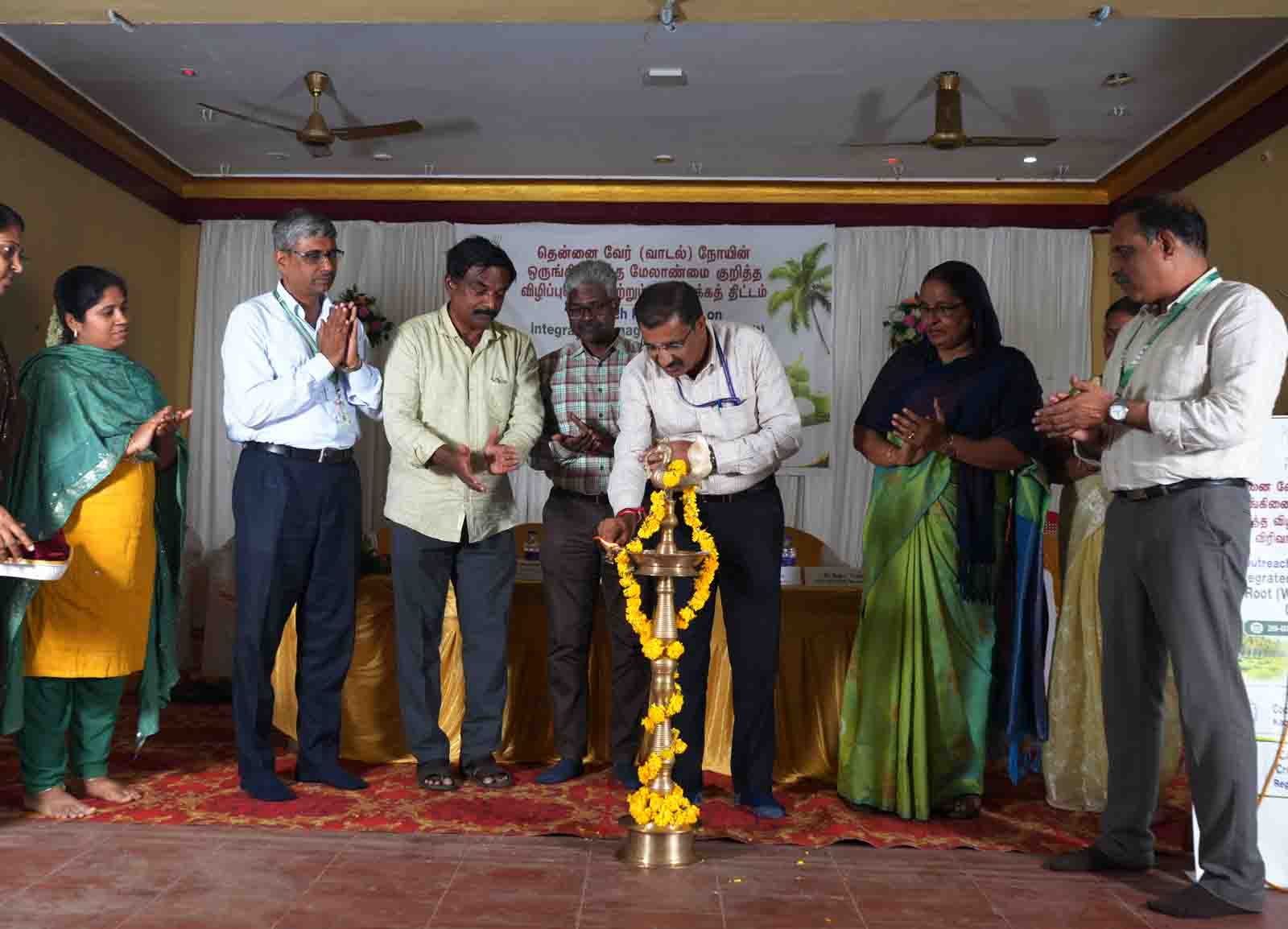
The Outreach programme on the management of root (wilt) disease of coconut, marking the successful completion of the two-year "Laying out of Demonstration Plot (LoDP)" project on Integrated management of root (wilt) disease of coconut, was organised by ICAR- CPCRI, Regional Station, Kayamkulam, at Panpoli, Tenkasi, Tamil Nadu, on 29 July 2026.
The two-year project, funded by the Coconut Development Board (CDB), Kochi, with a total outlay of ₹35 lakh, was implemented in four clusters of Tenkasi District—Vadakarai, Kanakkappillavalasai, Kadayanallur and Puliyarai. The project benefited around 110 coconut farmers through technical guidance, field demonstrations and the supply of essential inputs for the integrated management of root (wilt) disease.
Presiding over the function, Dr Regi Jacob Thomas, Head, ICAR-CPCRI Regional Station, Kayamkulam, highlighted the scientific and need-based distribution of inputs undertaken under the project. He noted that the interventions had contributed to improved palm health, a marginal reduction in the disease index and enhanced nut yield in the selected cluster villages. He emphasised the need to continue the programme for a few more years to sustain the gains achieved and further improve coconut productivity.
The programme was inaugurated by Dr B. Hanumanthe Gowda, Chief Coconut Development Officer (CCDO), CDB, Kochi, who lit the ceremonial lamp. In his inaugural address, he stressed the importance of holistic nutrient management and effective suppression of leaf rot disease as essential components in the management of root (wilt) disease. Referring to the changing market scenario, he observed that coconut prices, like those of onion and tomato, have become increasingly cyclical and sensitive under the influence of climate change.
Delivering the special address, Smt. Jesima Banu, Deputy Director of Horticulture, Tenkasi, appreciated the dedication of the ICAR-CPCRI team in conducting baseline surveys, monitoring field activities and ensuring timely distribution of inputs. She commended the scientists for their active field-level engagement and their efforts in promoting technology dissemination and adoption among farmers.
Shri E. Aravazhi, Director (Development), CDB, Coimbatore highlighted various developmental schemes of the Board and urged farmers to make full use of these programmes. Recalling his association with both the launch and valedictory phases of the project, he appreciated its successful implementation and the close coordination among the collaborating agencies.
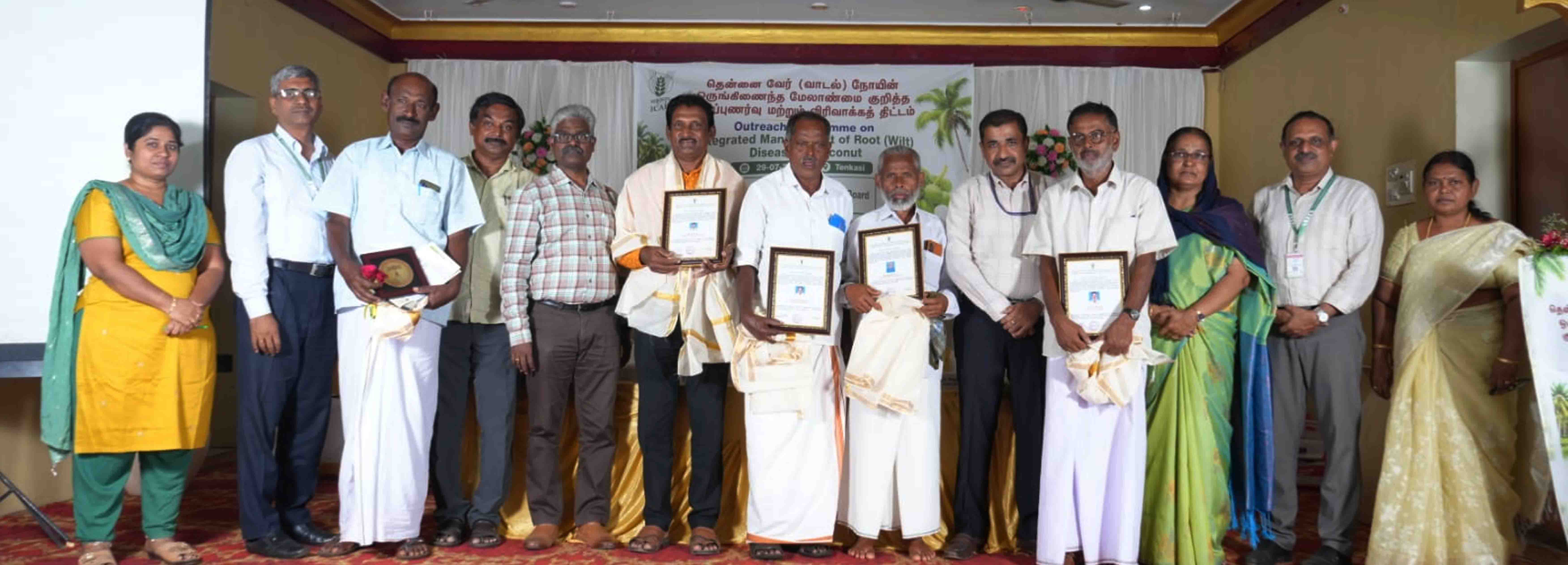
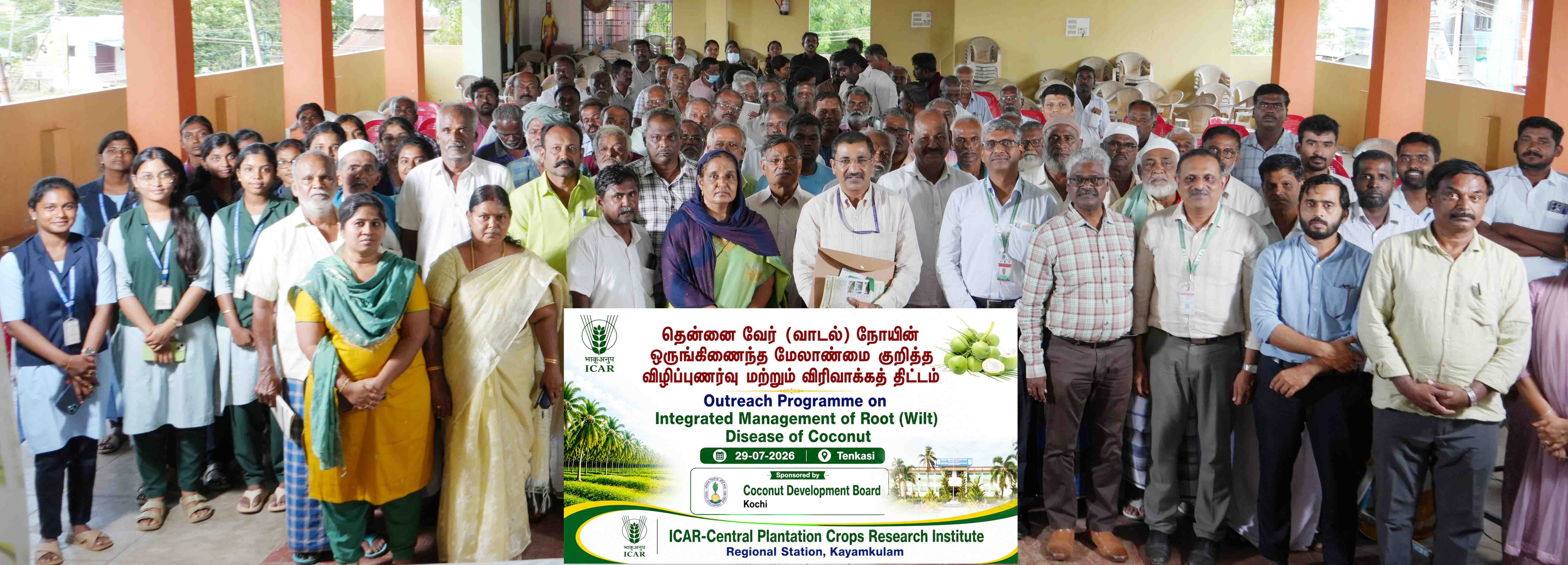
During the felicitation session, Dr A. Abdul Haris, Principal Scientist, stressed the importance of sustained follow-up through balanced fertiliser application, incorporation of green manures and the wider adoption of bioinoculants such as Kera Probio and Kalpa Vriddhi for maintaining long-term palm health.
Smt. M. Thangam and Smt. K. Subashini, Assistant Directors of Horticulture, described the project as a valuable learning experience and appreciated the sincere efforts of the ICAR-CPCRI scientists in ensuring its successful execution.
Earlier, Dr A. Joseph Rajkumar, Principal Scientist and Principal Investigator of the project, presented the major achievements of the LoDP programme. These included training programmes for officials of the Department of Horticulture, baseline surveys, awareness campaigns and demonstrations that resulted in measurable improvements, including a marginal reduction in disease severity and enhanced nutrient status of palms through the adoption of green manure crops, bioinoculants, organic manures and need-based nutrient management, including micronutrient application.
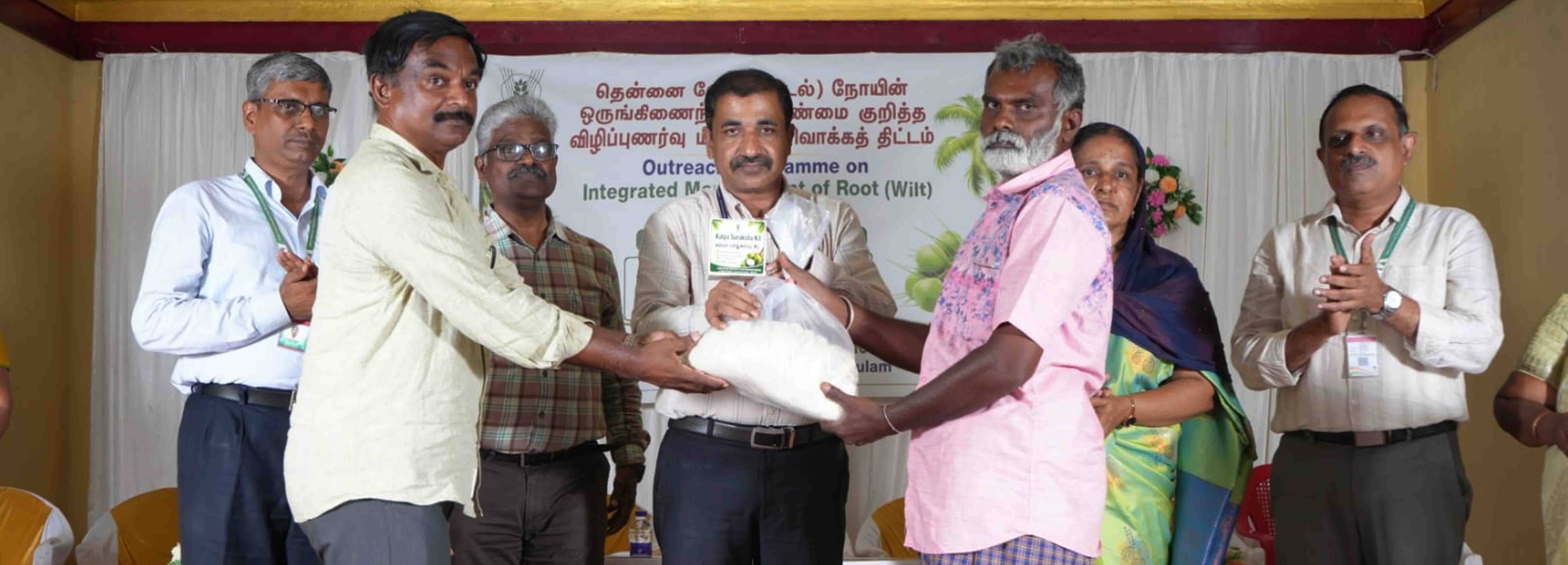
A technical folder documenting the outcomes of the LoDP programme on integrated management of root (wilt) disease was released during the function. On the occasion, a "Kalpa Suraksha Kit" was launched and distributed to all participating farmers. The kit comprised botanical paste and Metarhizium majus for the management of coconut rhinoceros beetle, Steinernema keralense entomopathogenic nematode capsules for the biological suppression of red palm weevil, and Trichoderma spp. for the management of basal stem rot and stem bleeding diseases. In addition, Kalpa Vardhini, a nutrient mixture developed by ICAR-CPCRI, was distributed to all beneficiary farmers.
During the interactive session, Shri I. Shamsutheen, recipient of the Kalpa Vajra Best Coconut Farmer Award from Kadayanallur, shared his experience of substantially increasing farm income through coconut-based intercropping and integrated farming systems. Best Farmer Awards were also presented to Shri Jabarullah (Kadayanallur), Shri Mohammed Hossain (Vadakarai), Shri Muhammed Easha (Kanakkappillavalasai) and Shri Subbiah (Puliyarai) in recognition of their exemplary adoption of recommended technologies.
The outreach programme was attended by around 120 farmers, 20 college students, officials from the Coconut Development Board, the Department of Horticulture & Plantation Crops and other stakeholders.
The programme commenced with a welcome address by Dr S. Indhuja, Senior Scientist, while Dr A. Joseph Rajkumar proposed the vote of thanks. Dr Jilu V. Sajan, Dr S. Indhuja and Dr K.M. Anes, Senior Scientists, served as conveners of the programme.
Following the valedictory function, Dr B. Hanumanthe Gowda, along with other officials of the Coconut Development Board and scientists from ICAR-CPCRI, visited the demonstration plot maintained by Shri I. Shamsutheen at Kadayanallur. The team appreciated the excellent stand of coconut palms integrated with a diverse range of intercrops, which has significantly enhanced farm profitability and served as a successful model of climate-resilient and sustainable coconut-based farming.